
Why design in higher education?
I’ve seen first-hand the ways design innovation is well-suited to drive change. From redesigning education pathways to align education with work alongside students and employers— to designing new programs from the ground up with whole communities— design is a powerful, catalyzing tool.
That’s why I’m invested in sharing and building these skills for educators committed to learning them.
Design is powerful (and relevant) for higher education because:
🎯 It clarifies the problem before jumping to solutions.
❗️ It gives permission to disrupt the status quo.
⛓️💥 It breaks down silos.
💰 It builds team buy-in and engagement.
🏎️ It accelerates the pace of change.
🤯 It develops mindsets and ways of working that change how institutions operate.
What is design?
Human-centered design is a process for solving problems, …especially when problems are messy, confusing, and involve people’s feelings and needs.
Design = Change, from “what is” to a future state informed by the needs of the stakeholders you’re co-designing with, built on trust, engagement, and motivated by improved outcomes and impact.
Below is an outline of the design process I use at Learning, Designed, where we partner with learning institutions and use design to improve experiences, outcomes, drive stakeholder engagement, and make change in communities.
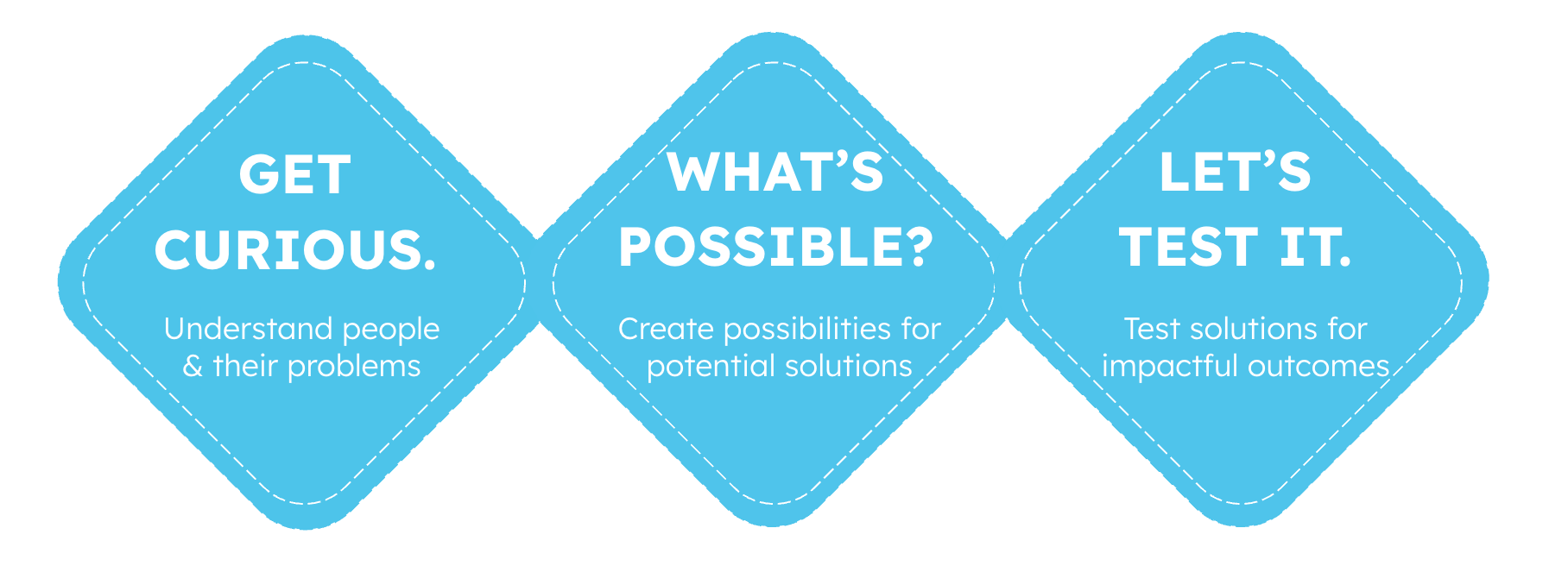
Read the full post:

Explore the services page below with an overview of how institutions regularly request my support.
