
The Work Behind the Work
What the BBB Breakthrough Accelerator helped me clarify about Learning, Designed, growth, and the next season of design-driven change.

Why it matters:
The work of improving education takes more than good ideas. It takes structure, language, tools, trust, and repeatable ways to move from intention to action. This season in the BBB Breakthrough Accelerator helped me reflect on delivering the work of Learning, Designed and strengthen the business behind it.
Go deeper:
Since April I’ve spent Wednesday nights from 5 to 8 p.m. in a room full of small business owners across San Diego. They represented businesses from home care to HVAC, coaching and consulting to cookies and cocktails.
These were businesses with revenue and foundation who were invested in getting the basics right as they grow.
An Experiment in Motion
When I started Learning, Designed two years ago, it was almost by accident. After launching a newsletter when I started my Fortune 500 L&D job in 2020, it sat dormant for nearly that entire 5-year chapter.
After a layoff and some networking calls, a few projects started to surface and Learning, Designed became the clearest heading I had for the work I was starting to do. I started talking about my work in progress and building a brand around my POV.
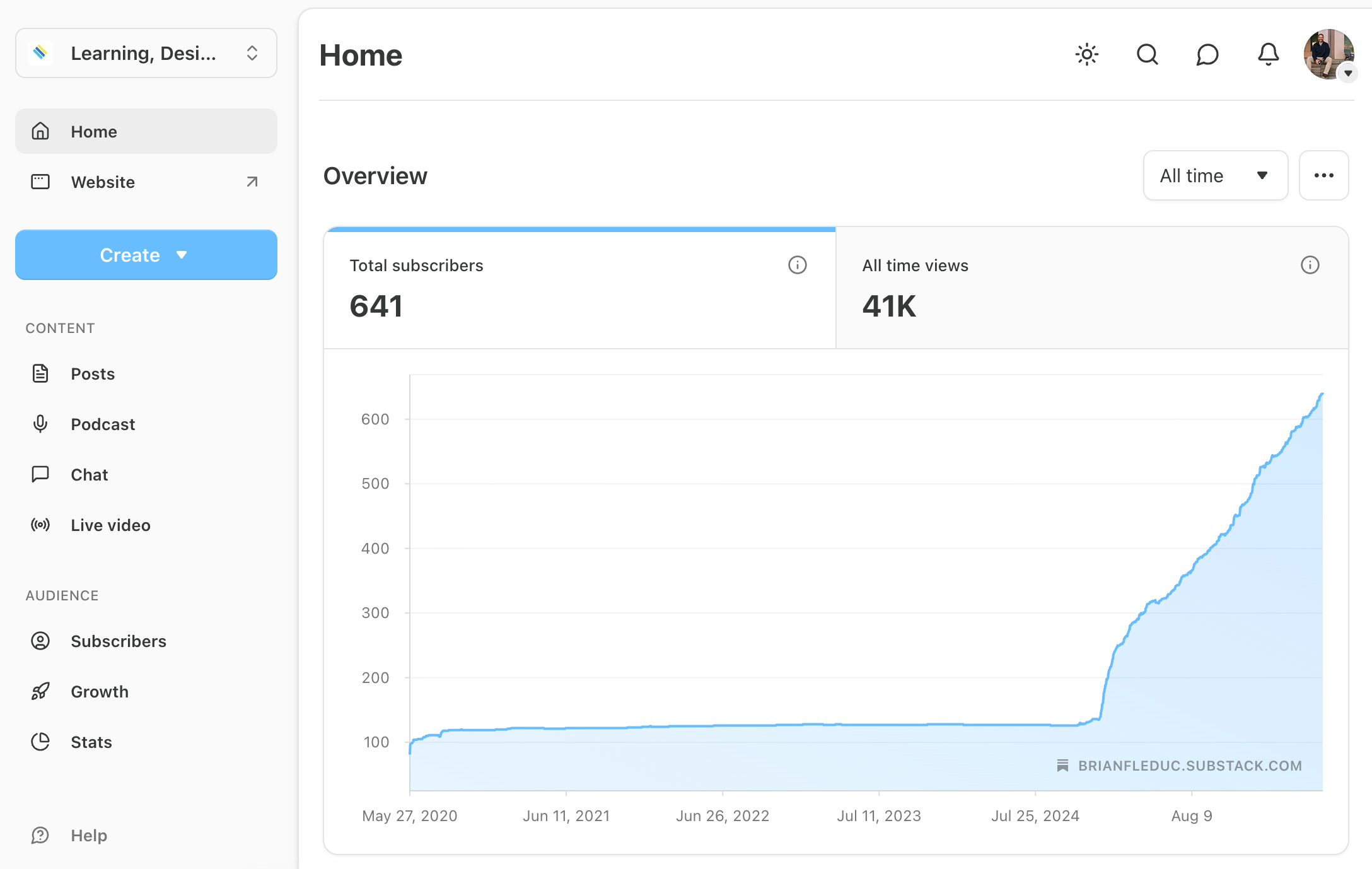
I knew the work mattered. I knew education leaders needed better ways to listen, explore real needs, create solutions, and align teams as they test and drive student-centered change. I knew design could help institutions move through complexity with more curiosity, clarity, and action.
But knowing your work matters and building the business behind it are two very different things.
Learning, Designed has been shaped by the work itself: the interviews, workshops, design sprints, coaching conversations, and 30+ design engagements that have helped me understand where education leaders get stuck and what helps them move.
Structure + Community: The BBB Breakthrough Accelerator
The Accelerator gave me something different. It gave me structured time to step out of the next project and ask what kind of work I want to do more of, who I am best positioned to serve, and what needs to be built so the business can support that direction. It helped me spend dedicated time on the parts of the business that are easy to avoid when you are busy doing the work: positioning, operations, sales, legal structure, pricing, financial foundations, marketing, buyer clarity, and the systems that make growth more sustainable.
In my own work, I often say that frameworks and structure are most important when the path is unclear. And as Learning, Designed grew, I knew I needed coaching, content, and community to provide the structure and insight it needed to grow. So every Wednesday night created a container to ask better questions about what I was doing:
Who am I really trying to reach? What problem am I helping them solve?
What is the clearest way to describe the value of design-driven change?
What should my business structure be?
Are my contracts protecting any of the work and IP that I’m creating?
How do I move beyond custom consulting and create repeatable offers, tools, and experiences that can reach more education leaders?
Where is the business strong and where is it still held together by effort, instinct, and a lot of Google Docs?
The Breakthrough Accelerator cohort introduced questions I hadn’t asked and helped answer questions I wasn’t sure how to pursue.
The Pitch as a Forcing Function
One of the final opportunities in the program is a pitch competition, which became a forcing function to reflect on my learning, insights, progress, and plans and package it in a compelling and interesting way.
In four minutes, there is nowhere to hide. You have to decide what matters most.
Being selected as a finalist pushed me to tell the Learning, Designed story with more clarity, evidence, and focus. It helped me reflect on what’s working and the challenges and assumptions I need to test and overcome as I go forward.
Experiments Shaping our Next Moves
The pitch helped me see the next season of Learning, Designed and where to focus our testing. That feels appropriate because Learning, Designed has grown through experiments from the beginning.
A dormant newsletter became a place to think in public. A few conversations became early projects. Those projects became tools, workshops, design sprints, and a sharper point of view about how education leaders can move from student-centered intention to action.
The Accelerator helped me clarify three experiments I want to carry forward:
Create clearer entry points for education leaders.
Not every team needs the same starting point. Some need a keynote to create shared language. Some need a change assessment to name what is getting in the way. Some need a sprint, a champions cohort, or a custom project focused on a specific student experience.Make Learning, Designed tools accessible beyond project engagements.
I’ve built templates, prompts, workbooks, and facilitation tools through this work. I want to test how those resources might help more leaders practice design-driven change, even when a full consulting project is not the right fit.Show how one engagement can build toward the next.
A keynote can create energy. A change assessment can surface barriers. A sprint can generate and test solutions. A champions cohort can build internal capacity. A custom project can help a team move from insight to implementation.
The goal is to make it easier for leaders to move from “we know something needs to change” to “we know what to try next.”
So here’s the question I’m holding now:
If you are trying to drive change in education, what kind of support would help your team move?
A practical tool? A short workshop? A keynote? A sprint? A cohort for internal champions? Something else entirely?
I’m asking because this is still an experiment. Learning, Designed has grown by paying attention to signals from the work, and I’d love this next season to be shaped the same way.
If you see a need, a gap, a useful starting point, or a better way to package this work for education leaders, I’d genuinely love to hear it (just hit reply, I read every email).
Final Reflections and Gratitude
It was fun to see how the rest of the top 5 finalists clarified their businesses, made progress through the experience, and what they plan to do next.
In some ways, I wished I could have heard more about their “before” earlier in the experience as an icebreaker to celebrate the wins along the way! That might be the sneaky magic of a cohort.
There were Wednesdays where I needed to be around others struggling and sharing small wins or major breakthroughs and encouragement. There is something powerful about being surrounded by people who are all trying to make their work more real. It reduces the loneliness of building. It gives you language for challenges you thought were just yours. It helps you see that growth is not only about scale.
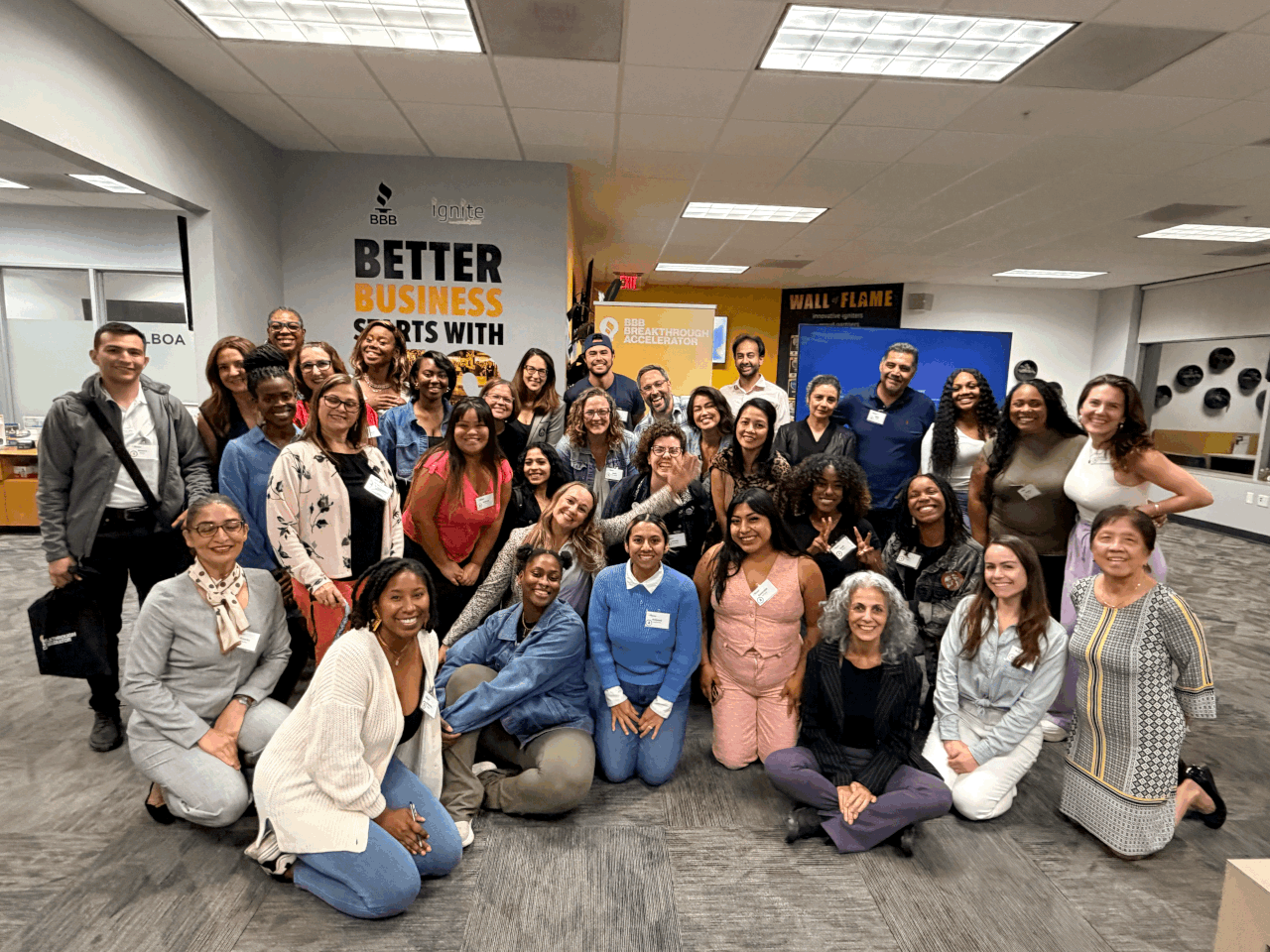
Sometimes growth is about building the foundations that can hold what comes next, and deciding what direction to direct your limited energy towards.
I’m grateful to Samantha, Karen, and Morgan for creating the conditions for that kind of learning and community. For all of the thoughtful work, curation, and coordination required to stand up the Breakthrough Accelerator program and create opportunities for San Diego entrepreneurs to connect, learn, and grow. A program like the one they’ve created can only exist because San Diego leaders said “Yes.”
I’m grateful to the many community leaders, partners, presenters, and mentors who shared their wisdom, frameworks, stories, and guidance throughout the program.
What’s Next
For Learning, Designed, this season helped me refine the work behind the work.
The mission is still the same: helping education institutions use design to improve student experiences and outcomes.
But the business behind that mission is becoming clearer, more focused and more ready to test our way into what comes next. That feels like a breakthrough worth celebrating.
If this resonates, share it with someone building student-centered change. Share with colleagues or leaders you trust dedicated to driving change in education.
In learning,
Thank you for being part of this community of over 1,600 curious, creative, changemakers who believe we can improve the student experience through design.
Brian LeDuc is the founder of Learning, Designed, where he serves as a design strategist partnering with learning organizations to improve the learner experience and drive change co-designed with students, educators, communities, and employers.