
The Embedded Internship Hiding in Plain Sight
How the jobs students already have could become pathways they can grow from

Why it matters:
Most students don’t have the luxury of choosing between work or experience. They need work to survive and experience to move forward.
When internships sit outside the jobs students already hold, we unintentionally reward those with more time, money, and flexibility. Reframing student work as a site for learning and growth isn’t just more equitable, it’s a missed opportunity for employers who want retention, capability, and talent that stays local.
The embedded internship is a different way of seeing what’s already happening.
Last week, a series of student conversations aligned with my research of the past year that helped me see opportunity from a new perspective.
Go deeper:
I sat down with two high school students at a Project Next “Future Center” to talk with them about their goals post graduation, how they formed their plans and goals, and the challenges they experienced along the way.
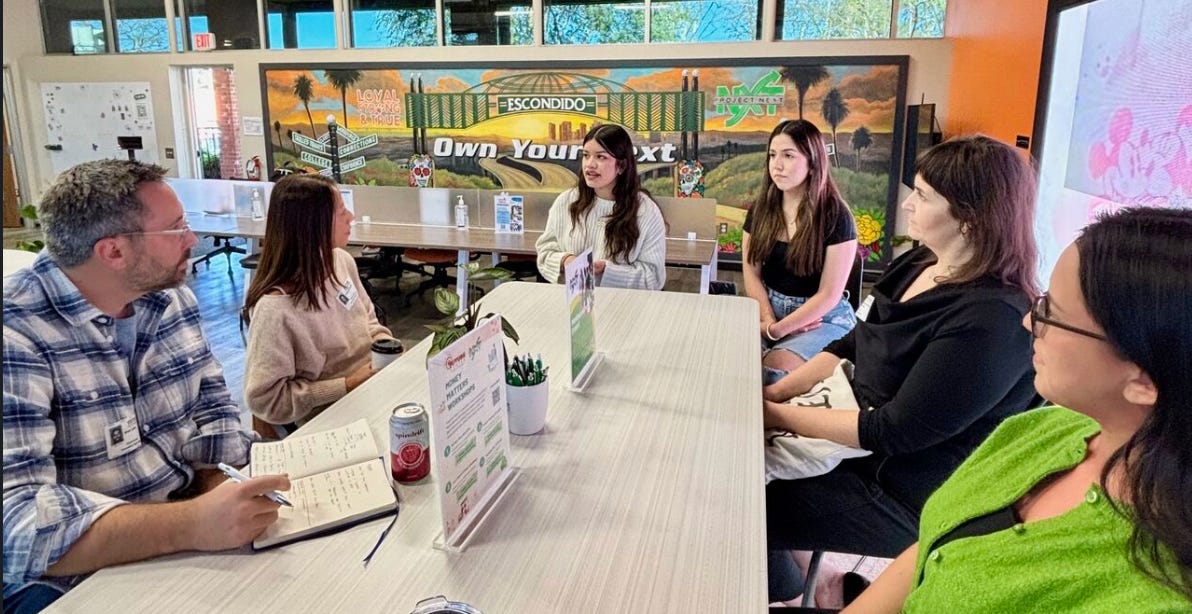
Both students were the first in their family to pursue a college degree and felt the pressure of a community who wanted the best for them but the personal tension of not being sure what they needed to do to achieve their goals. The students described the productive career exploration of meeting visiting professionals in Future Centers, at site visits, and networking events to clarify their direction.
One of the students offered the wisdom of her experience as advice for other students brilliantly, sharing:
“If you don’t know [what you want to do]— you don’t have to jump right in— give it time. You don’t have to know exactly where you’re going, maybe you’ll know eventually, but a little bit is good enough.”
high school student engaged with Project Next
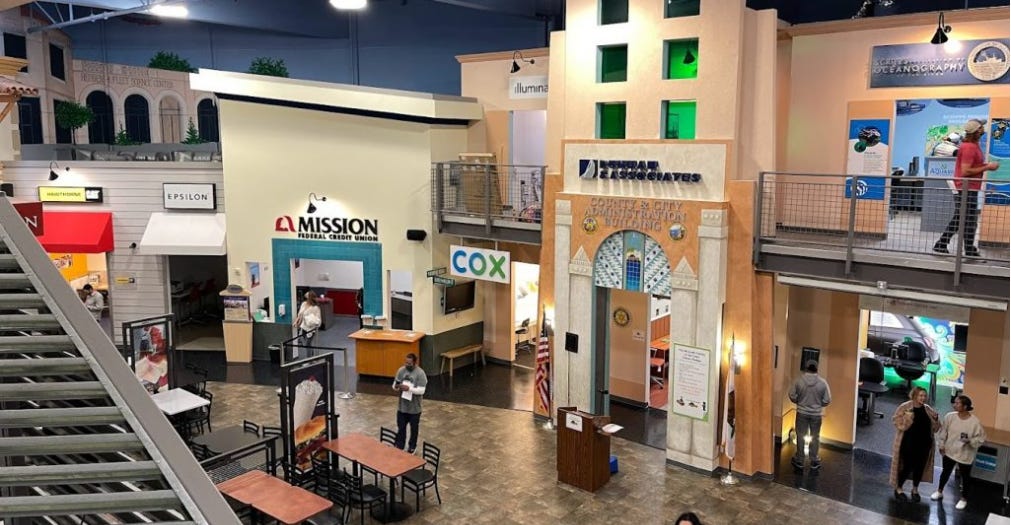
In San Diego, that exploration can start early thanks to programs like “BizTown” by Junior Achievement that reach over 60% of SD 5-6 graders (20k+) through a simulated city run by students after completing a 12-14 week curriculum at school. Organizations sponsor these opportunities to start building brand awareness in their community and investing in the long game of talent affinity. I had a chance to connect with the team at their open house and was entertained and inspired by the buzz of students running the town while I connected with JA’s chief impact officer.
To wrap the week I fast forwarded the student clock while sitting with undergraduate business students at CSU San Marcos where I serve as an Executive in Residence. This week’s class discussion touched on networks and Linkedin, and a notable trend surfaced as I took a first look through their connection requests.
CSUSM students are 50%+ first generation, and I noticed immediately that nearly every student who connected with me was already working. And while they’re pursuing higher education, most were working in jobs that didn’t relate to their academic pursuits: They’re servers. Baristas. Retail associates. Shift leads. Front-desk staff. Crew members. They’re holding jobs that keep them afloat while they’re in school and, in many cases, help support their families too.
This isn’t a surprise, the data has told us this story for a long time. Nationally, a majority of Gen Z college students work while enrolled, and service and retail roles make up a disproportionate share of those jobs. But as I reflected on several projects this past year focused on first gen college students and how to support their career development, the reality hit me differently with a strike of inspiration.
Work isn’t optional. It’s the baseline. For Gen Z workers, access to learning and growth is now one of the strongest predictors of whether they stay in a role often outweighs title or prestige. What is optional, at least as our systems currently design it, is whether that work counts toward their future.
The false separation we’ve normalized
Whether by family pressure, logistical friction, “opportunity sensing” or design decisions, somewhere along the way, we’ve programmed students to mentally separate their lives into neat buckets:
My job (what I do to pay the bills)
My education (what I do to earn the credential)
My internship (what I do to build my career)
Students internalize this early. In mock interviews I participated in last fall, I’d ask students about their work experience. They shared the big goals they hoped to accomplish and the jobs they were interested in and struggled to connect their “working to live” jobs to the needed skills.
I asked a few “Have you ever thought about interning where you already work to apply your marketing skills alongside your server job?”
Almost every time, the answer was some version of: “I didn’t know that was even an option.”
Not “I wouldn’t want to.”
Not “That wouldn’t be relevant.”
Just… “I never thought of it that way.”
That’s not a student imagination problem. Especially for students learning the professional world of learning and work. It’s a design problem.
The opportunity we’re overlooking
Let’s make it real. A student works as a server or crew member at a local restaurant or franchise. They’re studying HR, accounting, marketing, or supply chain.
What if that same workplace offered a structured, part-time internship add-on alongside the job they already hold? Same commute. Same employer. Same team.
Some shifts, they’re on the floor. Other hours, they’re learning how payroll works.
…Or sitting in on inventory planning.
…Or helping with social media and local marketing.
…Or shadowing a manager during scheduling and forecasting.
No partnerships for education as a benefit or funding for scholarships required. Just different way of seeing (and growing) the talent that’s already there and a new label for some hours at the same wage.
Why this matters (especially for first-gen students)
First-generation students are often navigating:
limited flexibility to take unpaid or low-paid internships
family expectations to keep earning while enrolled
fewer informal networks pointing them toward “career-aligned” roles
a lot of invisible labor that never makes it onto a résumé
And yet, first-generation students are significantly less likely to complete paid, career-aligned internships largely because they can’t afford to step away from paid work. We’ve built internship systems assuming students can step out of their academic and working lives to participate. But many students can’t step out.
So the question becomes: What if we designed internships that step in?
Employers already have the raw material
This is where I think employers, especially large service-sector companies, strong local franchises, and small and medium sized businesses have a massive, underexplored opportunity.
Employers already depend on these students. They already invest in training, onboarding, and supervision. They already talk about (and likely struggle with): retention, internal mobility, leadership pipelines, and community impact.
As Brandon Busteed has been challenging CEOs lately to close the 4.6 million internships gap, U.S. employers would need to offer internships at a rate of 5% of total jobs.
A first step might be even simpler than that for some companies.
Start by looking differently at students working for you as early career talent.
Rather than creating new hiring programs, what if we simply re-envisioned a student’s current job through an Embedded Internship: a small set of paid hours focused on learning, exposure, and contribution beyond their core role? An add-on of hours and experience beyond their current position that offered growth and learning opportunities to expand their awareness of the business operations and how their classroom knowledge and skills could expand.
I’m deliberately keeping this loose. In practice, it might look like:
a paid internship designation layered onto an existing role
rotational “back of house” hours for interested students
manager-mentored projects tied to real business needs
partnerships with nearby colleges to recognize the experience formally
Same wage. Same employer. New frame.
What students gain (beyond a resume line)
When students see their workplace differently, they deepen their connection of coursework to context, theory to decision-making, and part-time work to long-term pathways. They gain language for interviews and confidence in professional settings.
A clearer sense of how organizations actually work.
And maybe most importantly:
They stop seeing themselves as “behind,” “not enough,” or “working to live” because their path doesn’t look like the one they feel pressured to follow.
They signal they were so valuable in their existing role that they were ready for more: A promotion to an operational or managerial role, a career pivot, and a chance to preview work while adding value beyond the job that’s helping pay their bills.
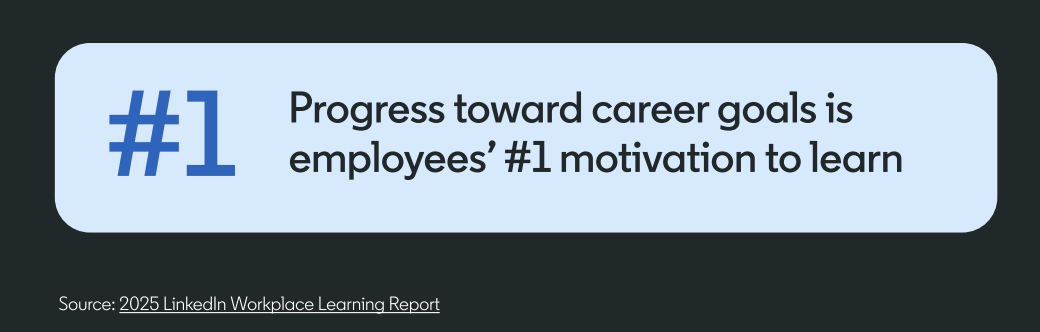
And as this data from Linkedin suggests, their investment to learn is driven by their career progress, which can offer more focus, engagement, and relevance in the classroom as well.
What employers gain (that we don’t talk about enough)
It’s smart talent strategy. Across service and frontline roles, learning and internal growth opportunities consistently show up as one of the strongest drivers of retention, especially for Gen Z employees deciding whether a role feels temporary or developmental.
But even more, employers get a preview of potential high performers, a more dynamic employee ready with a wider view of the business, and the good faith of their investment in local talent.
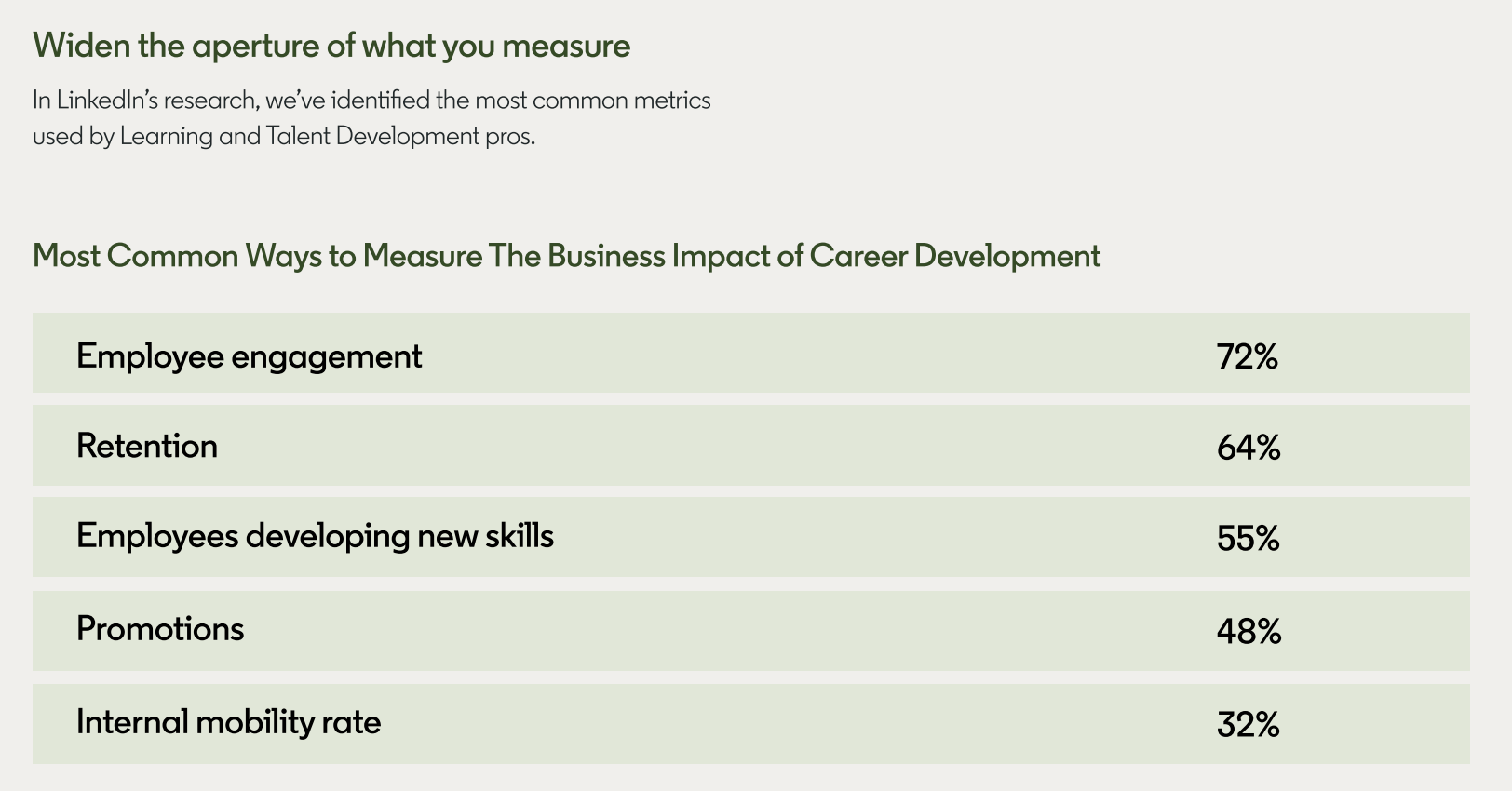
And organizations are already focused on employee engagement, retention, and skill development in their talent development strategies (according to Linkedin’s 2025 research):
Remember those storefronts in BizTown above? The opportunity to enhance affinity and retention only grows when employees see a future for themselves, especially if it allows room to learn and explore like an Embedded Internship.
A design question worth testing
In our 2025 Impact Report Learning, Designed highlighted our design work with ASU’s Work+ team focused on student employment and how to better equip supervisors to ensure their on-campus work experiences were impactful and high quality.
What if University leaders, career centers, or faculty helped equip students to start these conversations with their employers at first, and then built the infrastructure to support Embedded Internships at scale?
This is the perfect experiment that lives at the intersection of:
work-integrated learning
employer partnerships
first-gen support
and human-centered design
And a design question worth exploring in a local talent ecosystem:
How might we turn the jobs students already have into clearer, more visible pathways toward the careers they’re working toward?
I’m increasingly curious whether there’s a pilot here, especially with employers who already hire large numbers of students and care about retention, leadership development, and local talent.
If you’re an employer, educator, or ecosystem builder who’s curious about what this could look like in practice, I’d love to compare notes and explore this together.
Because I’m convinced the next wave of internships won’t be something new we bolt on. They’ll be something we finally learn to see.
Let’s start a movement. Share with friends, colleagues, or leaders you trust and respect dedicated to driving student-centered change in education.
In learning,
Thank you for being part of this community of over 1,300 curious, creative, changemakers who believe we can improve the student experience through design.
Brian LeDuc is the founder of Learning, Designed, where he serves as a design strategist partnering with learning organizations to improve the learner experience and drive change co-designed with students, educators, communities, and employers.
Want to collaborate? I’d love to help your organization drive change using design through projects, keynotes, design sprints, workshops, and coaching. Learn more.