
How I Write Reports That Move Work Forward
Sensing "What Happened,” Surfacing “So What,” Shaping "What's Next"

I haven’t occupied this “intro box” in a while, but there are 2 things worth calling out this week:
1. It’s officially been a year of writing weekly: This newsletter has created connection, opportunity, and fueled my work. I’d love to hear your feedback (< 5 mins): why you follow, what you need, and how I can serve you better in 2026. Writing here has documented and catalyzed my learning (and I hope some of yours), and created breadcrumbs of what I’ve been working on, learning, and building. It’s been so much fun. And it wouldn’t be nearly as fun if I was writing into the abyss…
2. I’m grateful you’ve joined me on the journey. I’ll do a full look back before EOY, but while we’re in a season of gratitude, I’m still amazed that despite growing readership 238% and views to over 20k on Substack that my “open rate” (~45%) has remained steady. In total (here + LinkedIn), we’ve grown to over 1,200 subscribers. 🤯 You’re (still) following, reading, and on the journey with me. Thank you.
What’s next: In addition to a full EOY impact report (soon), I’ve got some fun updates planned between today the start of 2026. In the meantime, I hope you don’t mind if I take a few weeks to enjoy the holidays. You’ll hear from me again in early and mid December about some work I’m doing in Houston, and then I’ll sign off for the year while I work on some fun surprises in 2026.
- B
Okay, back to what you came for! 👇👀
Why It Matters:
A great summary report doesn’t just tell people what happened, they help people see what matters inside the experience. They take everything that surfaced in the room, everything said out loud and observed, and turn it into something directional and instructive to help move the work forward.
This is because the real work of institutional change rarely happens in the room. Decision-makers aren’t always in the workshop or might feel rushed for a final call amidst quick share outs. And sometimes the people who care the most about the student experience aren’t the ones with the authority to shift it.
In most institutions, the pace of projects outstrips the pace of sensemaking. Teams have more ideas than capacity, more meetings than clarity, and more urgency than alignment. A thoughtful summary report slows the team down long enough to hear itself and inform next steps.
But the report is often the first moment someone outside the room engages with the work. It’s one way new stakeholders can enter the story. It’s how leaders build a case for next steps. And it’s often what informs whether an idea takes flight… or just stays a napkin pitch.
Go deeper:
Over the last few weeks as projects and the year wind down or evolve into their next chapter, I’ve produced 7 summary reports that are 10 pages long on average (with photos and an appendix of other docs, photos, and resources), I’m not writing books. But it’s left me wanting to share that the value isn’t the document, it’s what it enables.
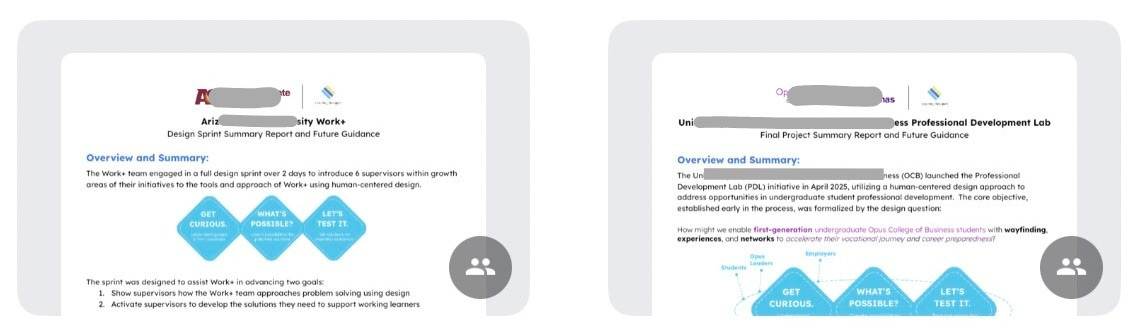
A strong summary report becomes a bridge between these worlds. It travels farther than I ever could. It carries the nuance of the session, the truth-telling that happened in small groups, and the signal buried inside days of “hallway conversation.” Done well, it becomes a shared story that others can pick up, share, and advocate from.
And for a campus leader who wasn’t in the room? A good report is their clearest window into what people said, where opportunities connect, and what’s next.
Most Reports Don’t Change Anything
Reports have a bad wrap. Lots of them (often too many to meaningfully engage with) feel more ready to sit on a shelf rather than drive action. In fact, I hesitated to pursue this post for lack of interest on a post about reports. But, I promised you “work-in-progress….”
…And I consider them among the most important things I do for partner orgs. Facilitation is a skill I’ve honed over many years and (along with a workshops design and tools) often gets the recognition as the mark of a “good” consultant or designer. But if my impact ends when I leave the room, even great facilitation doesn’t matter.
And I’m in the business of driving change on campus.
Reports may seem like a strange place to emphasize, but they are their own prototype in testing assumptions and pursuing project goals: clarifying that matters, creating shared understanding, and establishing hard truths and guidance on how to navigate it.
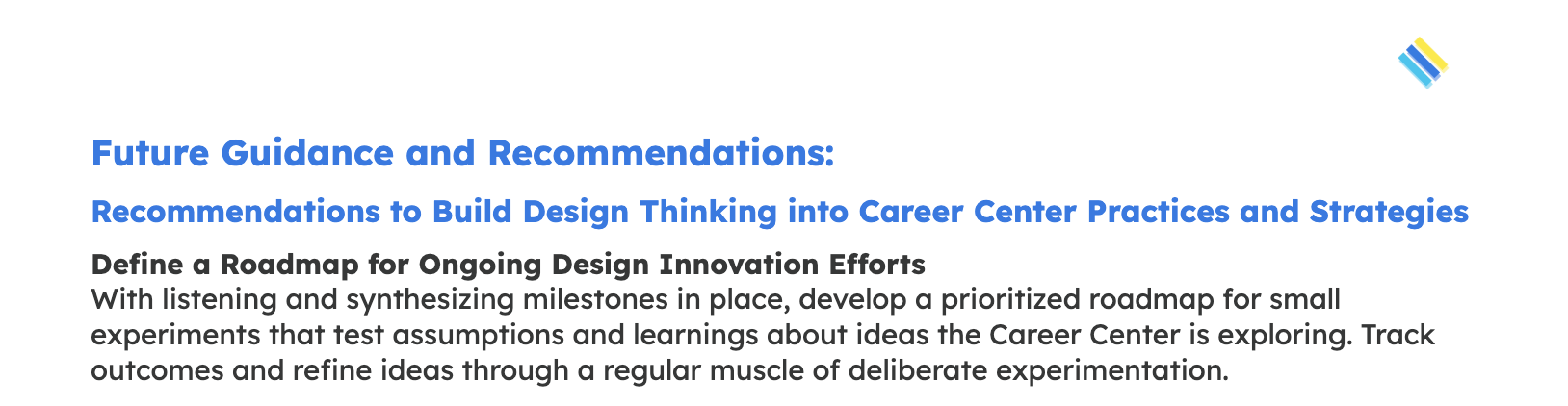
I believe the purpose of a summary report isn’t to recap what happened, it’s to offer a preview and a playbook for what’s next. It’s the hinge between insight and action.
How I Approach Summary: Sensing → Surfacing → Shaping
Sense the Landscape (What Happened and What I Noticed)
Enough context to be dangerous. Without understanding who was gathered or what they did, summaries can leave people guessing or skeptical. This section is a chance to build credibility and signal that the work was grounded in sound practice, process, and data. It’s more of an orientation than a a play-by-play.
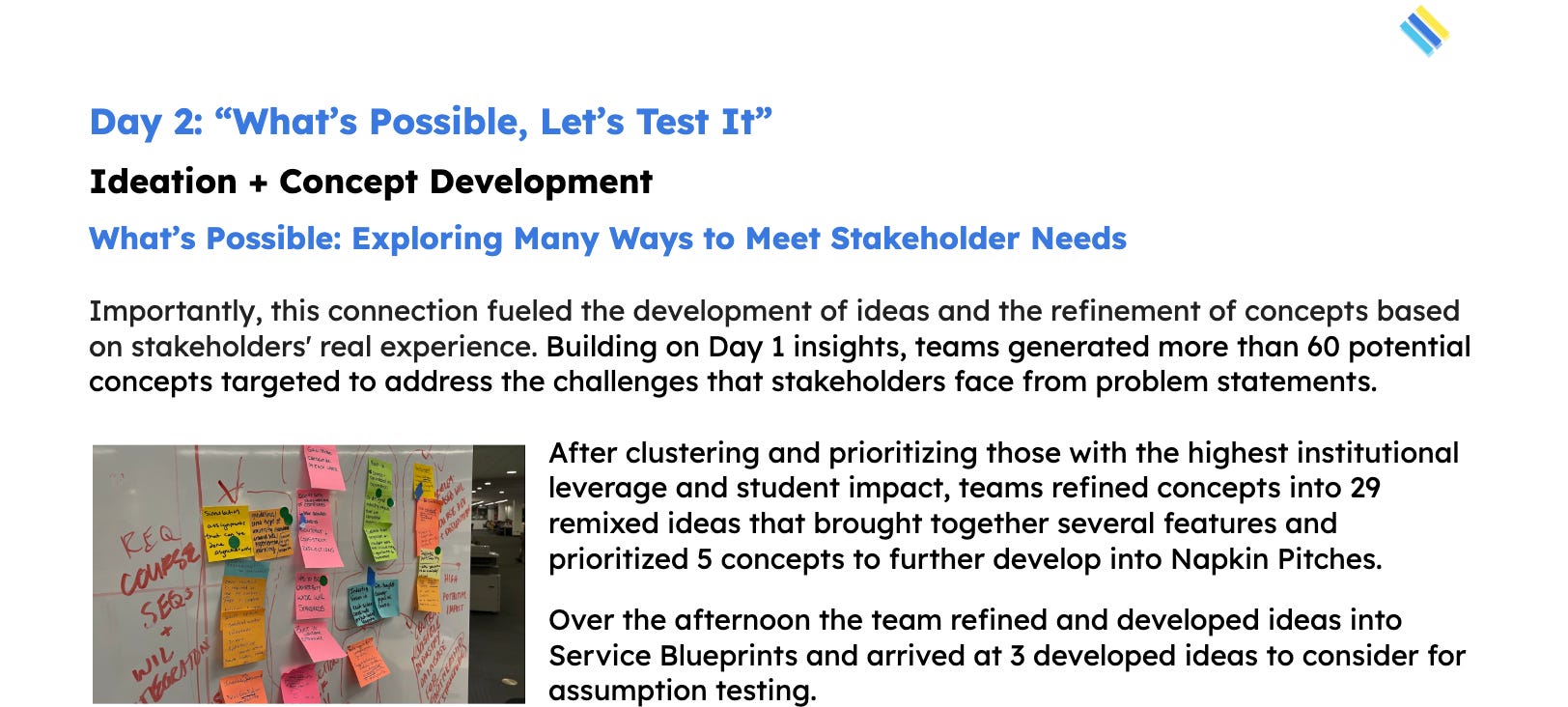
Real voices, examples, and outputs from the session. A challenge or reality in a student, employer, or faculty voice breaks through in a way that a consultants’ bullet point can’t. It gives readers enough of the landscape to understand the stakes and why the next sections matter.
If I can share an insight summarized in the voice of someone experiencing the problem, I do. I call them “Voices of Impact” to drive home insights.
Here’s an example “Voice of Impact” that still sticks with me:
“I’m trying really hard, but I honestly don’t know if I’m doing the right things or if I’m already behind. Everyone keeps saying ‘network,’ but I don’t know how any of this is supposed to work.”
…See what I mean?
Surface the Opportunity (So What)
Move beyond description → synthesis and insight. It’s one thing to “digitize” sticky notes and posters. It’s another to step back from everything produced and surfaced in the session and ask “why did that happen,” and “so what?”
Insight extends well beyond the products of a single group or team to what themes, tensions, and opportunities surfaced across the sprint or project. It’s where constraints or systemic dynamics are revealed. Where the underlying needs rise to the surface.
Surfacing opportunity also means capturing what never made it onto paper. In short term projects, there are conversations in the room that never hit a sticky note or pad; they’re the questions that people ask about the parameters for a solution, the hesitations they have about writing idea because of the friction they anticipate, or the lunch conversations about the idea a faculty member wants to test in their course.
This is where the report tells the reader “here’s what’s really going on and here’s what matters most.”
Shape What Comes Next: Moving from Insights to Action
I’m not just a designer. I’ve spent my career in higher education and nearly all of my time with Universities and their leadership: I know how things get done and often what’s required to begin to move systems.
I also know my project contacts don’t always have the full buy-in of their leadership team, are trying to cut through noisy meetings to drive home what they’ve learned and think should happen next, and value my perspective across hundreds of campuses over my career in driving change. Reports can serve as valuable opportunities to enable project teams and advocating for what needs to be done by helping them tell the story of the problem space and the opportunity.
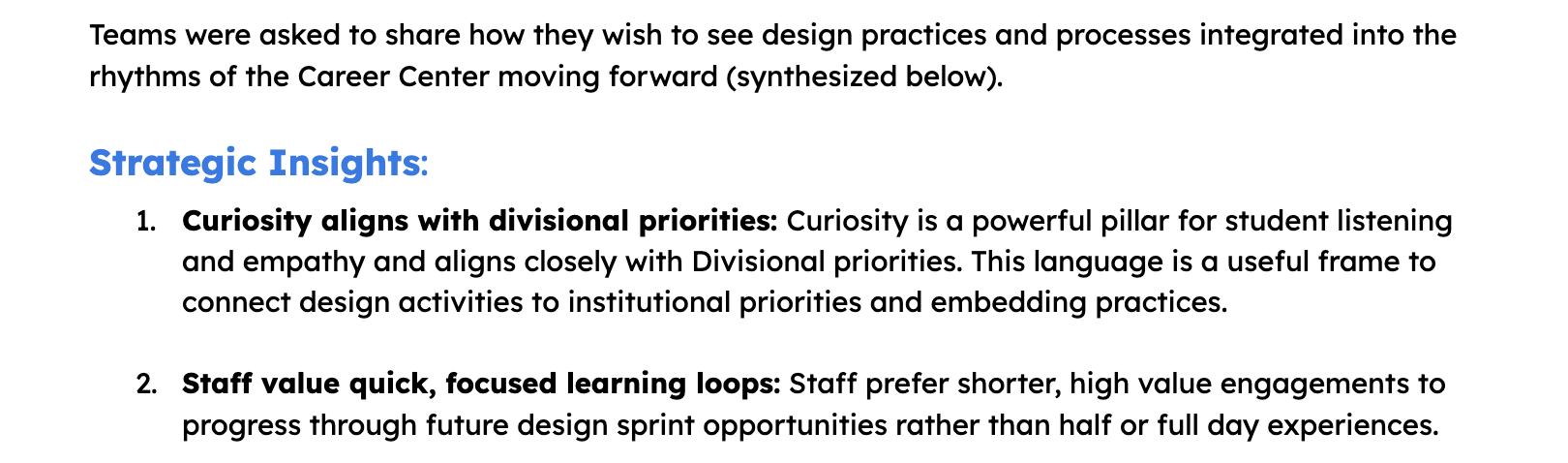
This starts with how recommendations are framed and what actions come next. This is where I give myself, and the team, permission to advocate for what the system needs next. This shaping isn’t about being prescriptive, it’s about building the case, context, opportunity, and path for next steps based on what we heard and learned. It’s the moment leaders move from “This is interesting” → “I see how this fits together, we have a direction.”
A good shaping section translates everything that came before into a path forward that feels possible, credible, and energizing because it acknowledges campus challenges and offers a path to engage the needs that we surfaced.
Selfishly, I love to be part of these conversations to see that moment crystallize. It often emerges slowly over the course of the project, but fully forms with the summary story and recommendations. It’s worth mentioning that there is plenty of preparation and development before this moment.
What Leaders Use These Reports For
An important note: I share every report with my project contact as a draft first.
As a pressure test of it’s value, I ask them who they plan to share it with and what it would need to say to drive their work forward with that person or group. If it’s not a summary or report the leader plans to share to communicate what happened and drive engagement and action, I haven’t done my job.
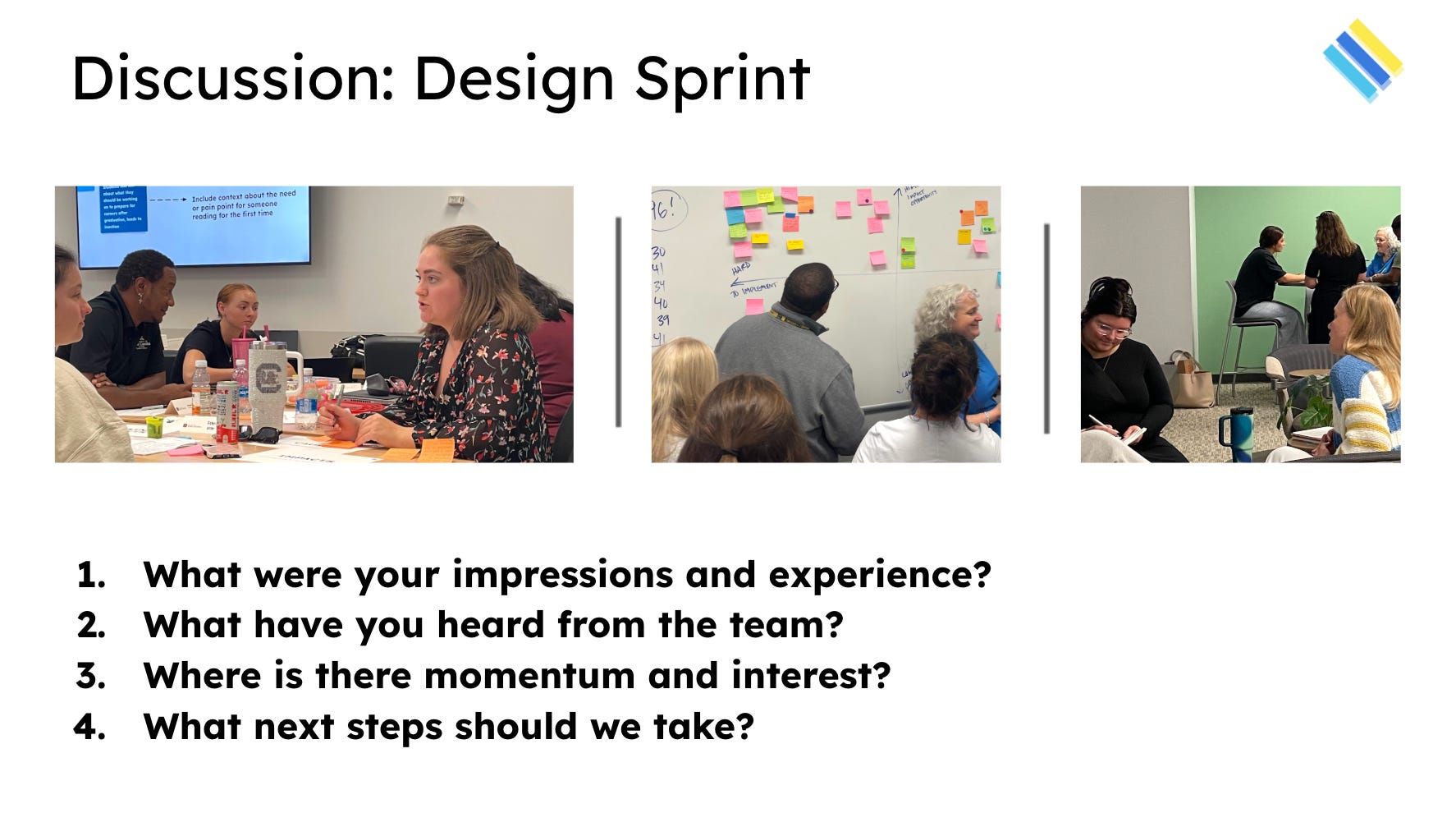
Even better if they want an accompanying guide to run a meeting with their leadership team about what folks took from the experience and what’s next. Here’s the reflection slide I built for one team after a recent Sprint to go over their Summary Report:
These reports don’t sit on shelves, they drive work. They travel across departments, into leadership meetings, into budget conversations, and into moments where the work needs a narrative to move forward.
At every institution I work with, people are doing the best they can inside the system they inherited. A good summary report doesn’t blame, it: gives people a shared story, organizes insights, and clarifies the opportunity.
Most importantly: It moves people toward what’s next.
Mentor Students in Design Tech HS’s Online Program
Design Tech HS @ Oracle is looking for mentors for their online design thinking program.
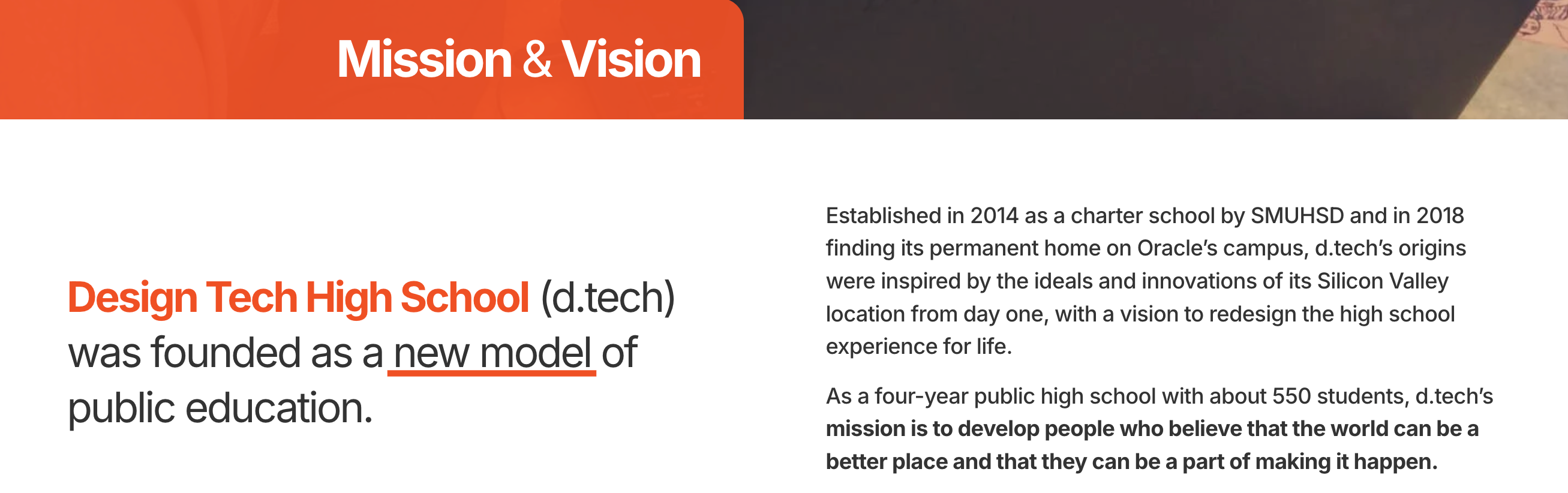
Mentors will be matched with a high school student enrolled in their innovation program. Mentors will be expected to meet with their mentee for approximately 1 hour per week for 6-12 weeks (there are two different program options). All meetings will take place via Zoom, and you will be supported by a Design Tech lead teacher. Pay ranges from $35-$50 per hour. Courses begin January 13th, 2026
The primary qualification is expertise and excitement for Design Thinking. If you are interested, please fill out this form: Interest Form
Sign Up Students for a Global Design Thinking Challenge!
Get your students involved in the 2026 Jacobs Teen Innovation Challenge: a free global program for middle and high school students to create solutions for real-world problems using design thinking hosted by the Jacobs Institute for Innovation in Education. Learn More
Registration is open until November 20, 2025: Sign up your team of students now!
I served as a judge in last year’s competition and really enjoyed the experience and what students developed. I can’t wait to see what problems students solve this year!
Nominate or Contribute Insights from the Field
“Insights from the Field” is a regular section sharing quotes from higher ed leaders reacting to the question “What advice would you give to someone driving change in education?”
If someone comes to mind who should contribute, please pass along the short form below (which includes an overview of the format). Feel free to copy me on that referral as well!
👉Share this form with folks you think should contribute their “Insight from the Field.” (or submit your own).
Learning is better when it’s social.
If this post moved something in you, tap the ❤️, pass it along, or connect and reach out on Linkedin. I’d love to hear what it sparked!