
From Content to Connection: Designing the Networks That Move Opportunity
People, Networks, and the Invisible Architecture of Opportunity

Why It Matters:
The biggest missed opportunity in higher education isn’t content, it’s connection.
When we activate connection through affinity, we don’t just help students find jobs. We help them find their people.
Go deeper:
This past week, I hosted a partner for a workshop to outline problem spaces worth exploring for their student population in upcoming sprints. Networks and connection were central to the conversation.
I shared data that underscored the opportunity space for cultivating networks at most institutions:
Only 9% of graduates say their alumni network helped them find a job.
Fewer than 50% of students say their off-campus jobs offered mentorship.
Only 1 in 4 graduates strongly agree they had a mentor who encouraged their goals.
Students from high-income families are 10 times more likely to become inventors than peers from low-income families — not because of talent, but because of exposure.
Higher education has long measured its value by content: the knowledge you gain, the degree you earn. But connection: who you know, who knows you, and who opens doors, continues to shape outcomes more powerfully than credentials alone.
The Hidden Infrastructure of Opportunity
Not convinced? When I ask faculty, staff, and students how they found their first job, the answers cluster around one pattern: personal connections and networking. Rarely is it a job board or career fair. It’s weak ties: a classmate’s referral, a professor’s introduction, or an alum who took the call.
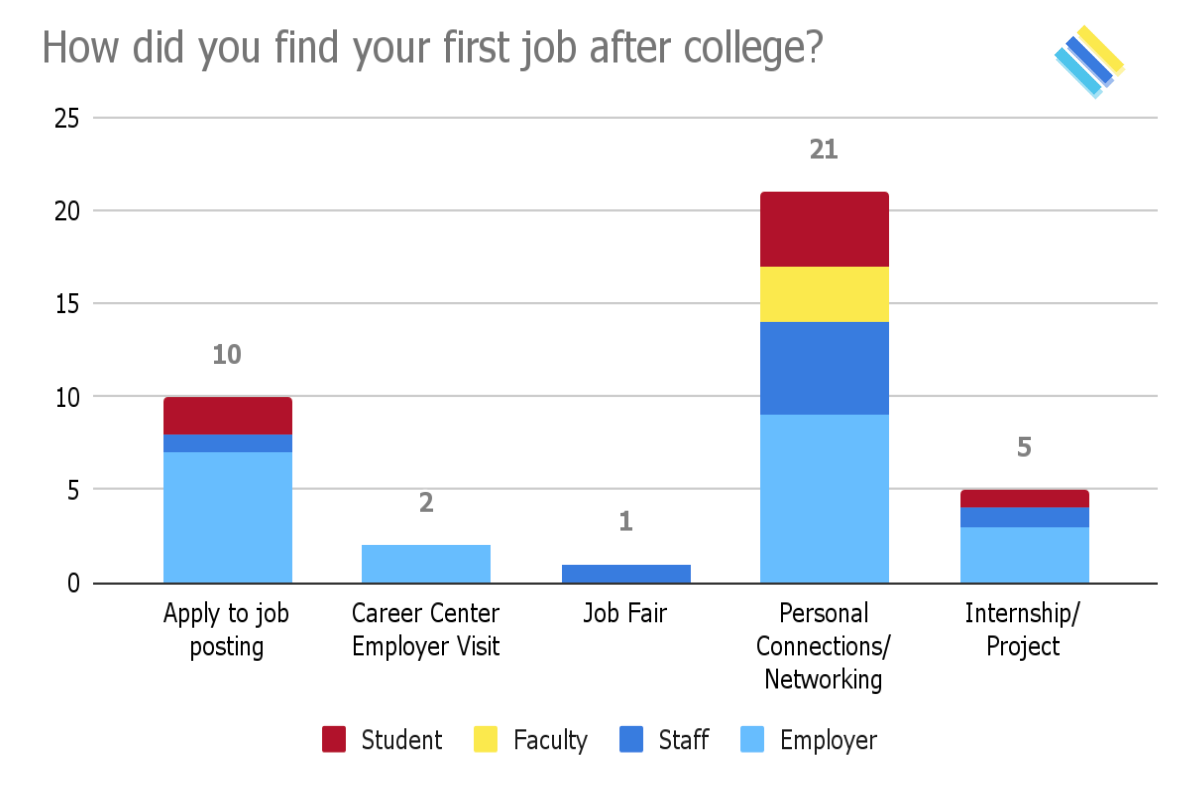
For some, those networks are inherited directly through family or associated life circumstances. For others, they have to be intentionally built. Yet most universities weren’t designed to cultivate and extend networks at scale. Alumni relations, career centers, and employer partnerships exist, but they often operate in parallel with separate goals, data, and engagement strategies.
The result is an ecosystem rich with people and potential but disconnected in practice.
How Opportunity Moves
When leaders tell me, “It’s hard to get employers to engage,” it’s often because we’re talking to people who don’t have clear incentives or visibility into what engagement looks like.
In reality, employers are not a single type of partner. Within any company, even HR, you’ll find multiple audiences: talent acquisition, learning and development, performance management, employee experience, and hiring managers. Each one has different goals and entry points into the university relationship.
Interestingly, when you find the right person at a company, they’re often already knocking on doors trying to get connected to the university, without success. Employers are looking for a clear set of ways to engage, often frustrated by disconnected interactions with faculty, career centers, and beyond.
And hiring managers, often anyone with an active job posting at the time, are the people who make the final call on who gets hired. They give direction, guidance, and feedback to the internal teams universities often interact with (recruiters). They’re also the ones most likely to rely on referrals, recommendations, and relationships when choosing who to interview.
It’s another reminder that opportunity moves through networks, not just systems.
Alumni as the Bridge
This challenge reveals a powerful institutional asset: alumni.
Whether it’s a birthday message that coincides with giving day or a local chapter event that rekindles belonging, alumni who feel connected are far more likely to engage. But what if we expanded what “engagement” means?
Alumni hold their relationships closely. Employers crave clarity. What’s missing is a framework that helps both understand the roles they can play in creating opportunity.
I’ve been prototyping a simple ladder of engagement that helps universities and employers move from individual acts of giving back toward strategic partnerships that expand the circle of connection for students.
Individual Engagement that Builds Affinity and Connection to “Give Back”
Tier 1: Alumni Connection
Guest speakers, welcome calls to new students, “day in the life” events, and small acts of giving back.
Tier 2: Alumni Contribution
Bespoke career advice pre-interviews, resume reviews, project feedback, job shadows.
Evolution from Individual Connection to Employer Engagement to “Build Partnerships”
Tier 3: Company Collaboration through Alumni
Co-designing course projects, hosting recurring internship cohorts, and joining advisory boards.
Tier 4: Company Partners
Strategic partnerships with shared goals, employer-in-residence programs, co-taught classes, sponsored projects and competitions, employee upskilling, and continuous executive alignment.
Each tier builds on the last, scaffolding how alumni connections evolve toward employer engagement and partnerships. Alumni become a close proximity champion to help companies wayfind the partnership they want with Universities as the institution builds connection and engagement that can grow through individual alumni. Most importantly, it helps students experience increasing proximity to people who can open doors and fuel opportunity.
A New Way to Think About Relationships
What if the first ask to alumni wasn’t for a donation, but for a connection?
What if it was to make welcome calls to new students or send a note of encouragement before an interview? Or better yet, to have an informational interview that leads to a referral for a role at their company?
When connection becomes the goal, and deliberate opportunities exist to participate, small interactions accumulate into meaningful relationships. Those relationships expand social capital, reinforce belonging, and create the kinds of bridges that make opportunity visible and accessible.
That shift, from engagement as event participation to engagement as shared investment, changes how alumni see their role in the university’s success. They move from feeling like donors to becoming advocates and connectors.
The Future of Belonging
The work ahead isn’t just about programs or platforms; it’s about positioning for connection. It means fully owning the role institutions play in cultivating relationships and helping people connect to propel opportunity.
Students shouldn’t have to stumble into networks by chance or rely on the privilege of proximity. They should be surrounded by a community intentionally built to help them find mentors, advocates, and belonging.
When connection becomes part of the institution’s DNA, opportunity follows.
Nominate or Contribute Insights from the Field
“Insights from the Field” is a regular section sharing quotes from higher ed leaders reacting to the question “What advice would you give to someone driving change in education?”
If someone comes to mind who should contribute, please pass along the short form below (which includes an overview of the format). Feel free to copy me on that referral as well!
👉Share this form with folks you think should contribute their “Insight from the Field.” (or submit your own).
Inform Study on Workplace Skills for Success
Colleague and friend Brian Wooten is leading a research project examining the skills and behaviors that contribute to workplace success. The purpose of this study is to assess how well a course curriculum equips students with the knowledge, skills, and professional practices needed to thrive in the workplace. Findings will be used to strengthen the curriculum and provide recommendations that enhance student preparation for career success.
The team is seeking participants who have experience working with others in a professional setting to complete a brief survey (approximately 5–8 minutes). These inputs will be invaluable in helping us better understand and support the development of the next generation of leaders.
To participate copy and paste this link: https://kennesaw.co1.qualtrics.com/jfe/form/SV_55q0bTd3Z5Val7w
Brian also offered to meet with interested teams to discuss the study in more detail and/or share a report of our findings. Timely, important work!
Learning is better when it’s social.
If this post moved something in you, tap the ❤️, pass it along, or connect and reach out on Linkedin. I’d love to hear what it sparked!