
Connecting Stories to Systems
The impact of empathy and the power of context. When design meets empathy, supervisors see their work, and students, differently.

Why it matters:
When supervisors hear directly from students, their view of “the job” shifts.
It’s no longer just about tasks: it’s about people, context, and growth.
Design sprints help campus leaders see how empathy turns into insight,
and see how they can drive change with their influence. When we connect stories to systems, change starts to stick.
Go deeper:
To kick off October I spent time in Tempe working with supervisors of student employees across campus recruited to participate in a 2 day design sprint hosted by the Work+ team at ASU.
The team is continuing to scale their support of supervisors across campus with big goals and the intent of the sprint was twofold:
Show supervisors how the Work+ team approaches problem solving using design,
Activate supervisors to develop the solutions they need to support student employees.
While the structure of a sprint is often similar, the goals, people, and outcomes always look different. What stood out to me about this event was how deeply the student interviews connected with supervisors.
One advisor shared this summary as part of their Day 2 “takeaways” from the Sprint experience:
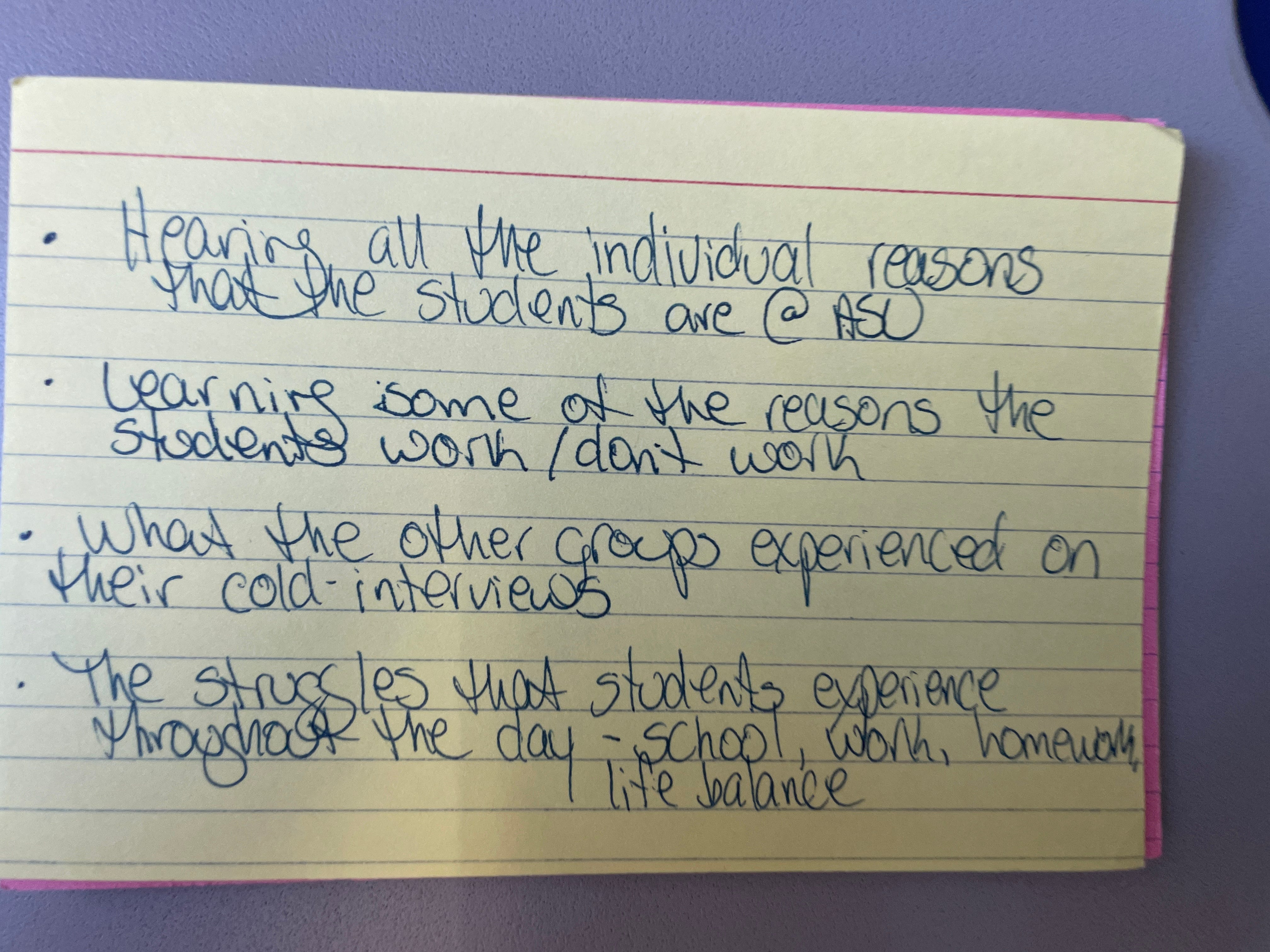
We set up 2 formats: a long form interview over lunch to test their interview questions and build confidence in their approach, and a partial afternoon engaging with students impromptu by walking around high traffic areas on campus to conduct shorter “on the street” interviews.
In just a few hours, the teams interviewed more than 20 students across three target subgroups we wanted to learn from.
More importantly, the stories from those interviews made an impression: supervisors talked about the ways interviewing students gave them a deeper appreciation for the challenges students face, the barriers they encounter working on campus and off, and how they think about preparing for future careers.
I share a quote attributed to Mr. Rogers when introducing the interview process: “there isn’t anyone you could love once you hear their story,” but I watched supervisors take this to heart.
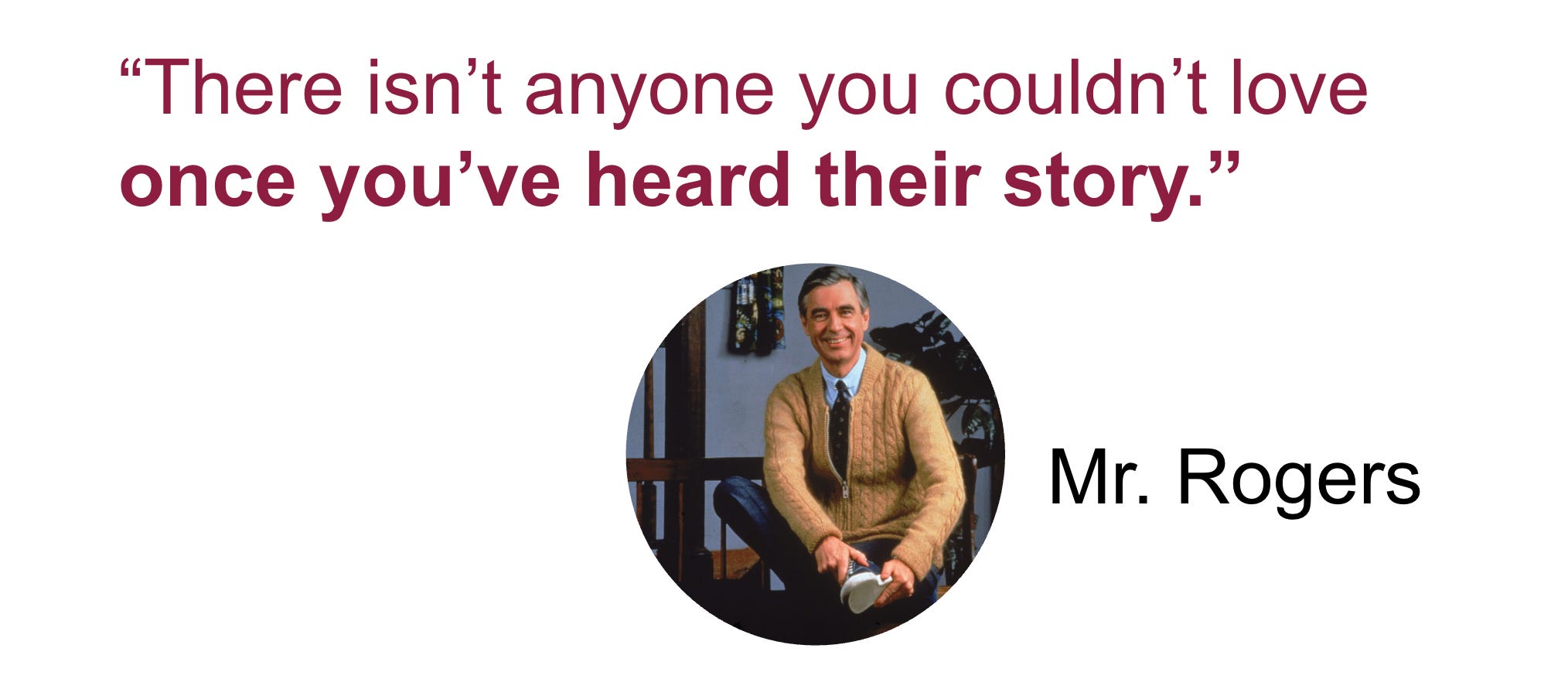
They connected to student stories and described how it helped them understand more deeply the experience that working learners have on campus.
The role of context in designing solutions
As we transitioned into day 2, the ASU team made a great suggestion to help reinforce the context we hoped to address student needs and it gave me an opportunity to introduce a framework from service design I don’t usually talk about to describe how layers of context help design experiences that meet student needs.
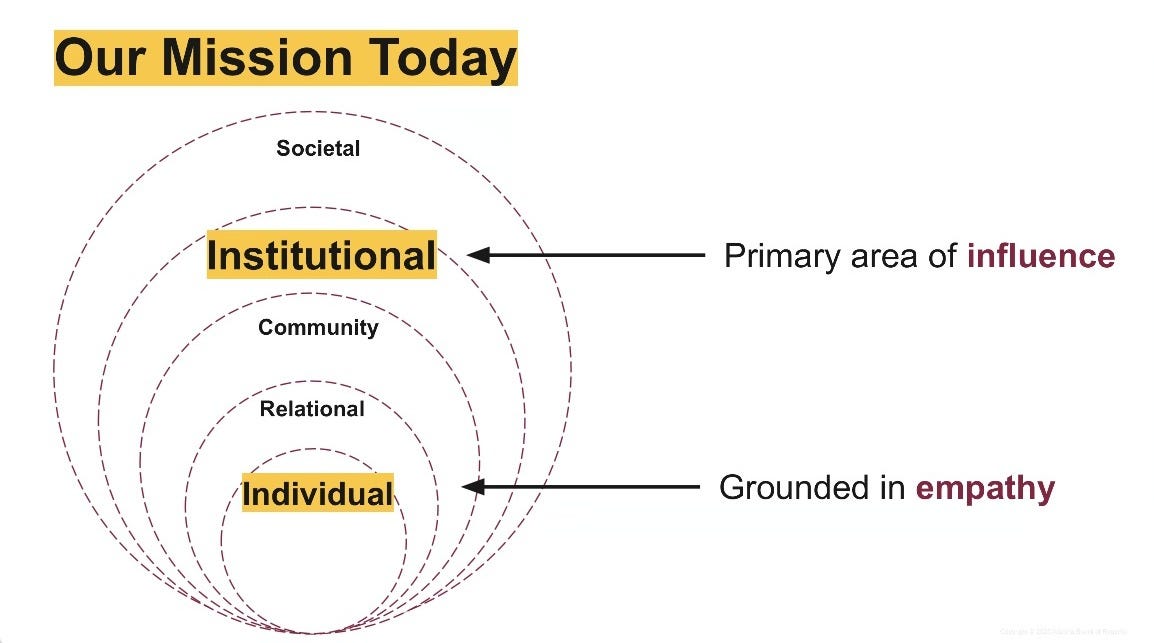
While we might not be able to impact the larger societal forces (directly, immediately), we can consider how we drive change in the contextual layers we have influence over: institutionally, communally, and relationally.
The empowerment and invitation to influence the student employment experience at the institution based on the needs they surfaced connected the dots for several people in the room.
Importantly, this connection fueled the development of ideas and the refinement of concepts based on students real experience. Supervisors were grounded in real needs and exploring ways the institution could be better suited to address them.
Grounding in empathy and context is so important because it’s the foundation that enables us to explore solutions that make an impact. That drive change that is impactful and human-centered. And when we connect people to the people with whom we’re working to solve problems, we become invested and focused on the change that we’re driving, who it serves, and how it helps.
Nominate or Contribute Insights from the Field
“Insights from the Field” is a regular section sharing quotes from higher ed leaders reacting to the question “What advice would you give to someone driving change in education?”
If someone comes to mind who should contribute, please pass along the short form below (which includes an overview of the format). Feel free to copy me on that referral as well!
👉Share this form with folks you think should contribute their “Insight from the Field.” (or submit your own).
Inform Study on Workplace Skills for Success
Colleague and friend Brian Wooten is leading a research project examining the skills and behaviors that contribute to workplace success. The purpose of this study is to assess how well a course curriculum equips students with the knowledge, skills, and professional practices needed to thrive in the workplace. Findings will be used to strengthen the curriculum and provide recommendations that enhance student preparation for career success.
The team is seeking participants who have experience working with others in a professional setting to complete a brief survey (approximately 5–8 minutes). These inputs will be invaluable in helping us better understand and support the development of the next generation of leaders.
To participate copy and paste this link: https://kennesaw.co1.qualtrics.com/jfe/form/SV_55q0bTd3Z5Val7w
Brian also offered to meet with interested teams to discuss the study in more detail and/or share a report of our findings. Timely, important work!
Learning is better when it’s social.
If this post moved something in you, tap the ❤️, pass it along, or connect and reach out on Linkedin. I’d love to hear what it sparked!